
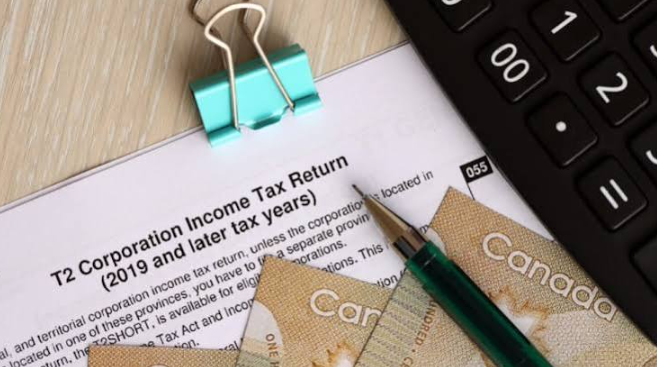
Ask a lot of owner-managers what happens to their corporate return and you’ll get a shrug. A box of records goes to the accountant. A return comes back with a sticky note saying “sign here.” Some months later, a notice of assessment turns up in the mail. And in between? Mostly a mystery. It’s worth clearing up, because once you see the steps you can budget for the tax bill, stop missing deadlines, actually follow the return when it’s put in front of you, and know your next move when the CRA replies. Let’s follow one Ontario corporation’s T2 from year-end through to the final assessment.
Stage 1: Year-End Close
When: the first few weeks after year-end.
It all begins with closing the books. Each bank account, credit card and loan gets matched to its statement, line by line. Someone goes through who owes you and who you owe, counts the inventory if you carry any, and pulls together the paperwork on equipment bought or sold. And someone looks hard at the shareholder loan account, to see whether you, the owner, owe the company money.
That job usually falls to you or your bookkeeper. Do it well and everything after goes faster and costs less. Do it badly and you’ll pay the accountant to clean it up.
Stage 2: Estimate and Pay the Tax
Deadline: two or three months after year-end.
Here’s the bit that catches people out: the tax is due long before the return is. Most corporations have two months from year-end to pay any balance. Canadian-controlled private corporations meeting the small business conditions get three. A good accountant will rough out an estimate from the nearly finished numbers so you can pay in time, since interest kicks in the day after the balance-due day.
See also: Jaalifestyle Com – Access the Latest Lifestyle Tips With Jaalifestyle
Stage 3: Financial Statements
Usually happens: months two to four after year-end.
Now the accountant turns your closed books into year-end financial statements. For most small corporations that means compiled statements, built from what you provide, with no audit or review. If your bank insists on a review engagement, there’s more work, and in Ontario a licensed public accountant has to lead it.
This is also when the year-end adjustments happen: accruals, amortization, fixes, things moved to the right account. Make sure those get posted back into your books too. Otherwise next year starts from the wrong numbers.
Stage 4: Preparing the T2
Often runs alongside Stage 3.
Statements done, it’s on to the T2 itself. The accountant will be:
- Translating your statements into the CRA’s GIFI codes.
- Getting from accounting income to taxable income on Schedule 1.
- Working out capital cost allowance on Schedule 8.
- Filling in the shareholder, dividend, loss and associated-corporation schedules.
- Figuring federal and Ontario tax, small business deduction included. (Ontario dropped its lower rate from 3.2% to 2.2% on July 1, 2026, so a year that straddles that date gets prorated.)
- Doing the slips that go with it, like T5s for any dividends paid to shareholders.
Stage 5: Review and Sign-Off
Aim for: a few weeks before the filing deadline.
Expect your accountant to take you through it: taxable income, tax payable, what’s owing or coming back, and anything that moved a lot since last year. Ask whatever you like. When you’re happy, you sign an authorization letting the accountant e-file for the corporation.
That signature isn’t a rubber stamp. As a director, you’re saying the return is correct to the best of your knowledge.
Stage 6: Electronic Filing
Due: six months after year-end.
These days most corporations have to e-file the T2 using CRA-certified software. You’ve got six months from year-end, so June 30 if your year ends December 31. Try not to file on June 29, though. A few days’ cushion leaves room for a software rejection or a missing slip.
For a sense of what a full-service engagement covering these stages looks like in practice, the Webtaxonline t2 corporate tax return Toronto service page outlines one firm’s approach, from document collection to CRA filing.
Stage 7: Notice of Assessment
Typically shows up: several weeks after e-filing.
Once the CRA has processed the return, it sends a notice of assessment with its own tax figure, anything it changed, and what’s owing or being refunded. Plenty of corporations see it first in My Business Account, or hear about it from their representative.
What to do: put the assessment next to the return. Did the CRA change something? Find out why. Disagree? You generally have 90 days from the date on the notice to file an objection.
Stage 8: After the Assessment
Don’t file the assessment away and forget about it. The CRA can generally reassess a Canadian-controlled private corporation for three years after the original assessment date (four for most other corporations), and longer in some cases. In that window, a review letter could show up asking you to back up particular items.
So keep the return, working papers, statements and receipts somewhere you can find them. The general rule is six years from the end of the tax year the records relate to, minimum. Don’t shred early.
A Sample Timeline for a December 31 Year-End
- January: the books get closed out, every account reconciled.
- February: records go off to the accountant, and an estimate of the tax comes back.
- By February 28 or March 31: whatever’s owing gets paid (which date depends on whether you get the extra month).
- March to May: statements first, T2 right behind them.
- Early June: you go through it together, then you sign.
- By June 30: it’s e-filed, ideally with a few days to spare.
- Summer: out comes the notice of assessment, and you compare it to what was filed.
Conclusion
A T2 isn’t one event. It’s a string of them, each waiting on the one before: books closed, estimated tax paid, statements prepared, return finished, reviewed, filed, assessment checked. Put two dates on the fridge: when the tax is due, and when the return is due six months out. The other steps? Learn them once, and come next spring the money’s there, your records are waiting, and you’ll know what to ask.
Frequently Asked Questions
How long does it take to prepare a T2?
That depends on how tidy the books are and how complicated the corporation is. Clean, reconciled records speed things up a lot.
When will I receive my corporation’s notice of assessment?
For e-filed returns, often within several weeks. It varies, though.
Do I have to file my T2 electronically?
Almost certainly. Most corporations now have to e-file with CRA-certified software; the exceptions are narrow.
How long can the CRA reassess my corporation?
Usually three years from the original assessment for a CCPC, four for most other corporations, and longer in certain cases.

